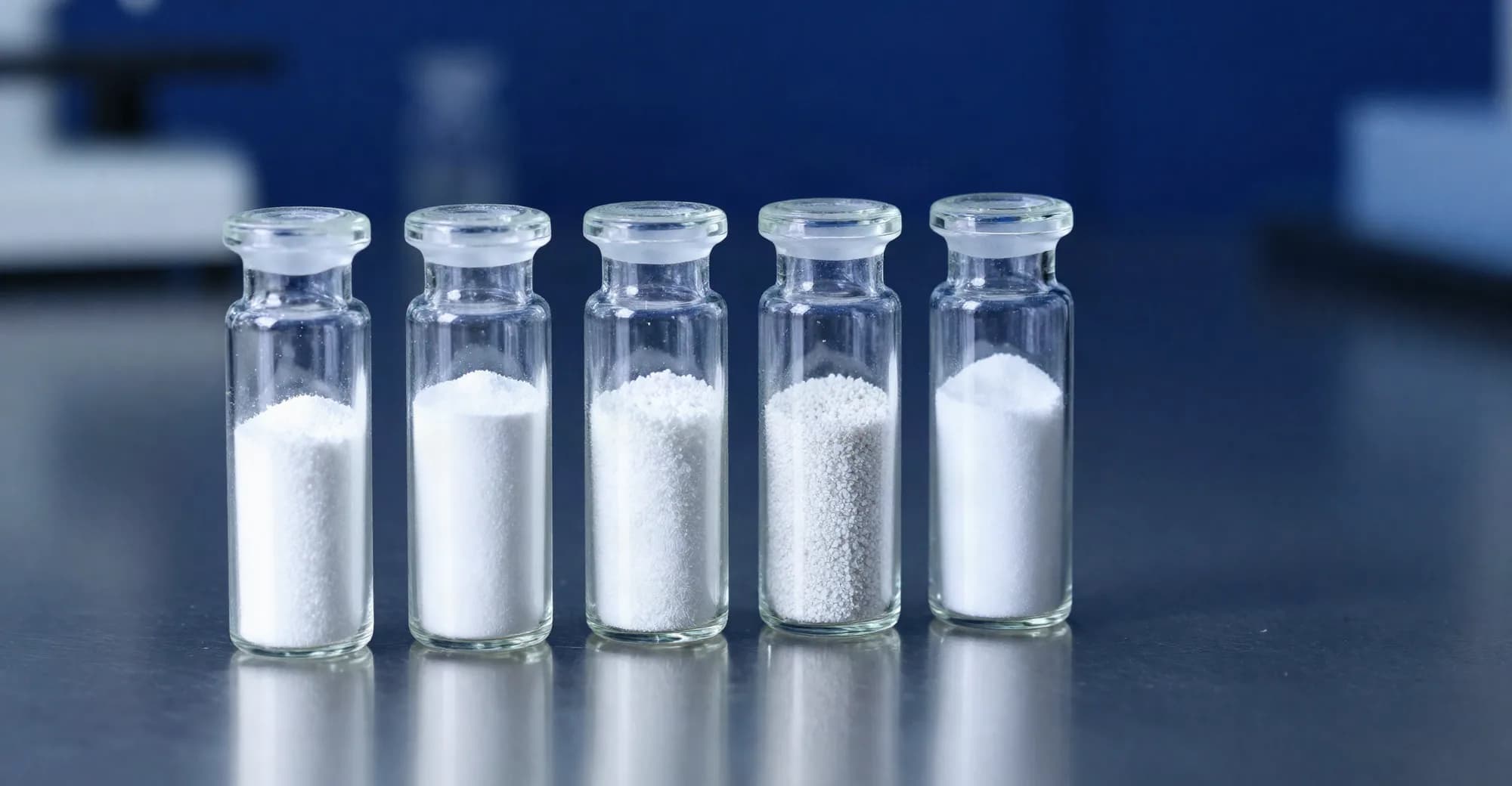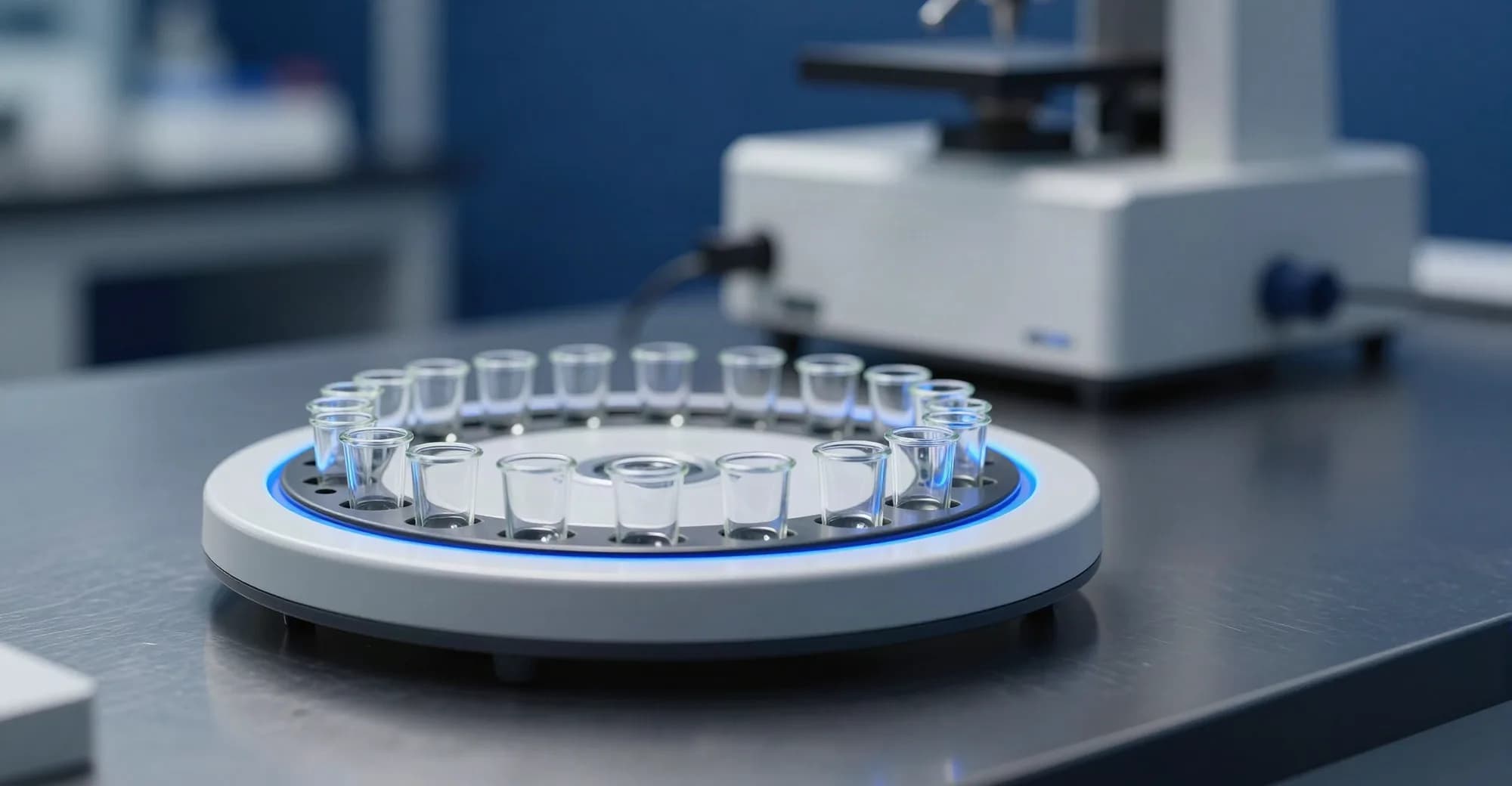
XRD, FTIR, SEM, BET, ICP-OES and particle size analysis help turn a sample into traceable technical information.
Physicochemical characterization is a central step in evaluating advanced materials. On its own, a sample says little without data on composition, phase, morphology, particles, surface and processing.
In bioceramics and calcium phosphates, different techniques complement one another. No single test describes the whole material.
XRD
X-ray diffraction identifies crystalline phases and allows crystallinity to be assessed. In some cases it can support phase quantification through specific methods.
FTIR
Infrared spectroscopy identifies chemical groups and helps confirm phosphate and carbonate structures or surface modifications.
SEM/EDX
Electron microscopy makes it possible to observe the morphology, size and organization of the particles. EDX contributes local elemental analysis.
BET
Specific surface area matters for understanding interaction with matrices, dispersion potential and available surface.
ICP-OES
Quantitative chemical analysis allows major and trace elements to be assessed, supporting control of composition and Ca/P ratio.
Particle size
Particle size distribution influences processing, texture, dispersion, sedimentation and behavior in formulations.
Conclusion
Characterizing a material is more than issuing reports. It is building the technical basis for deciding whether that sample meets the project's objective.