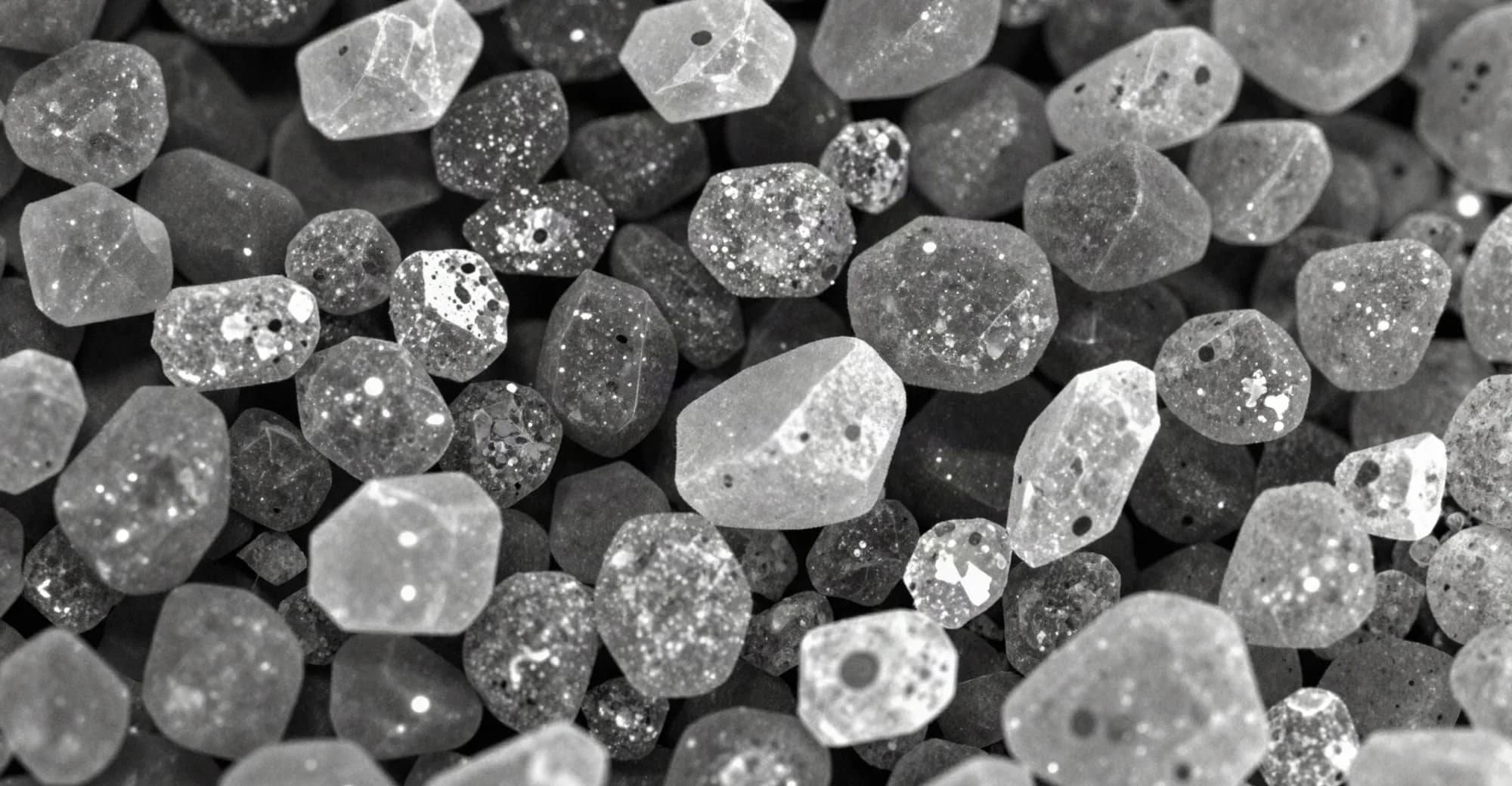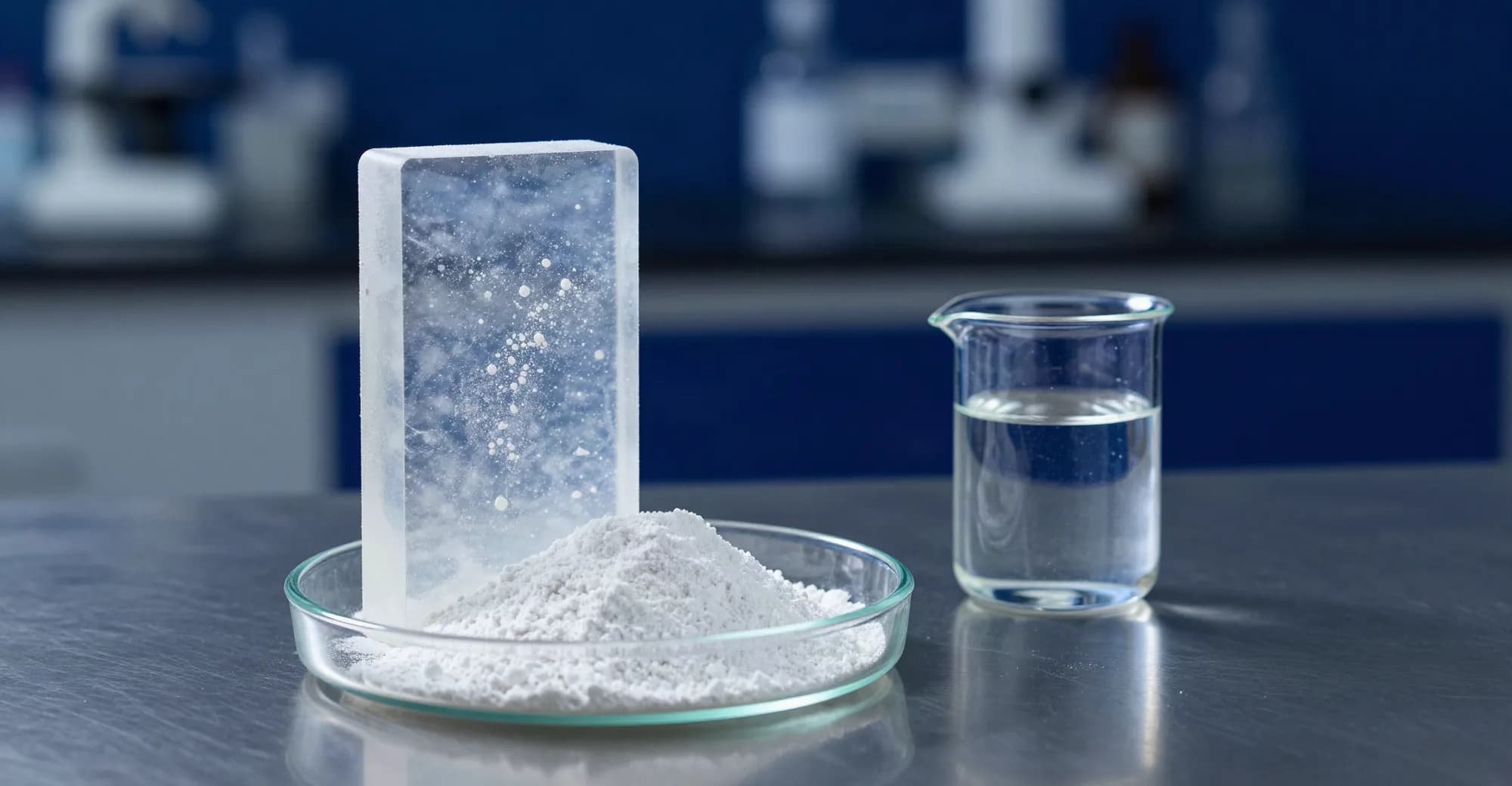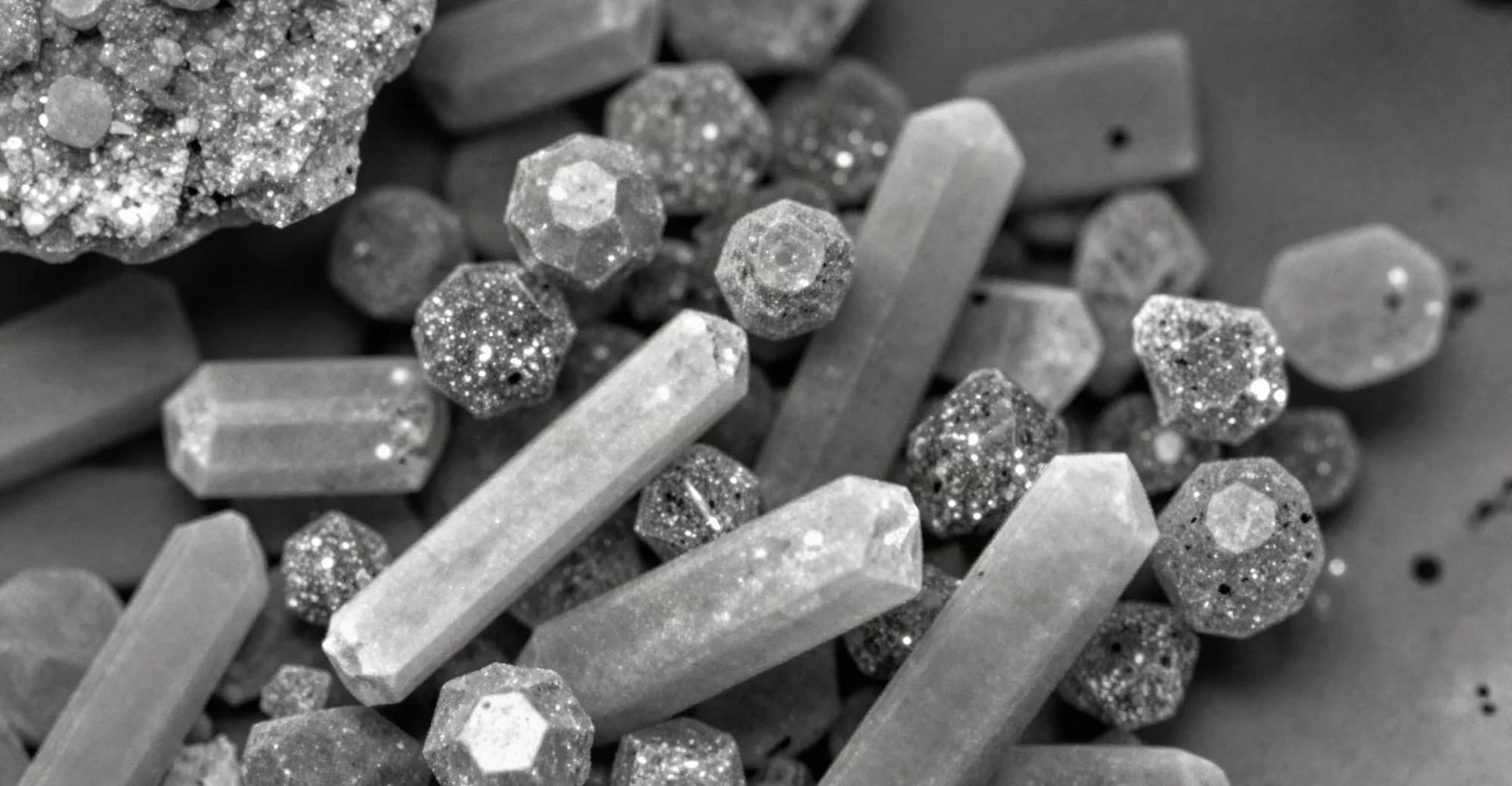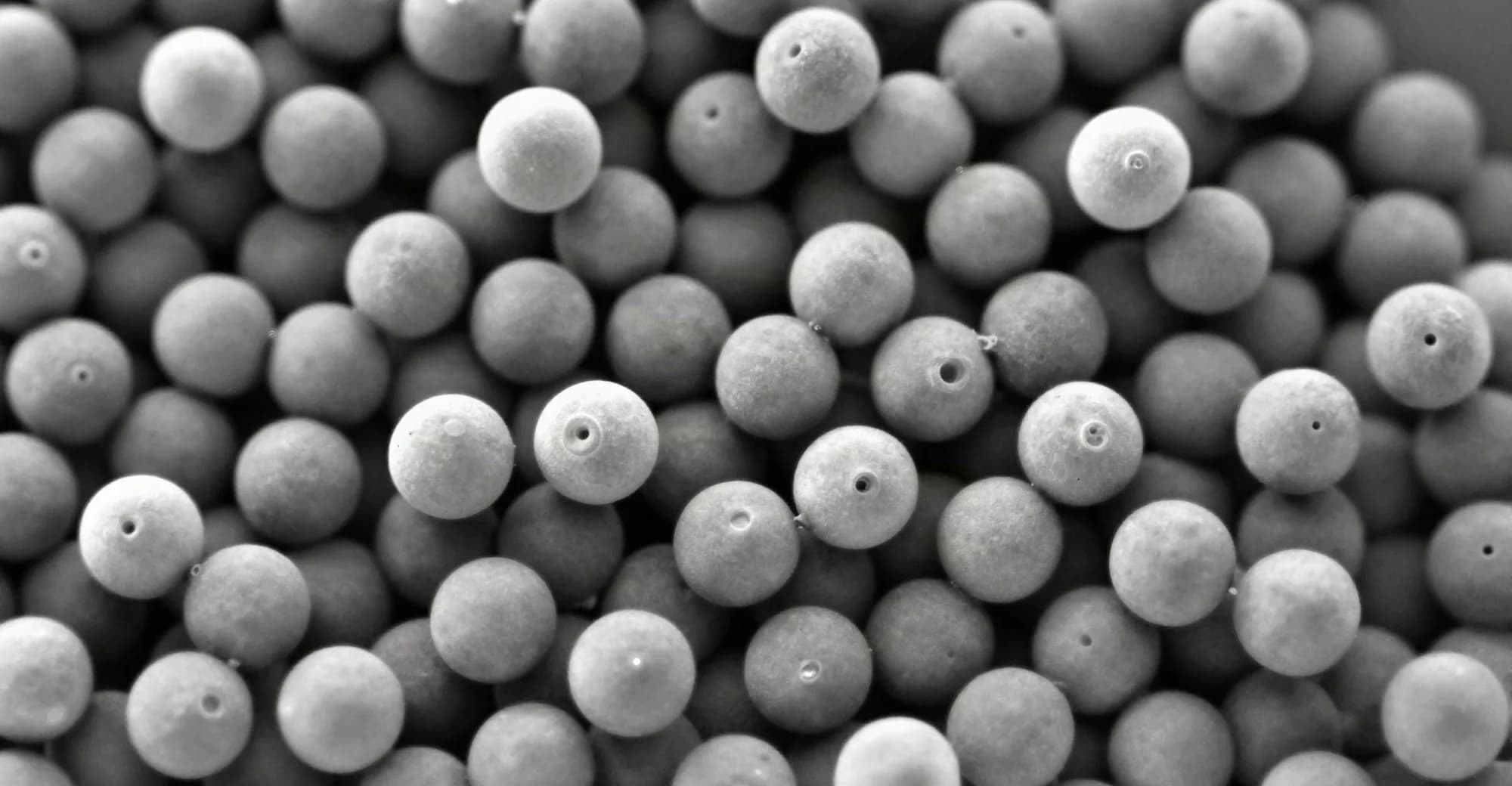
Calcium phosphate research has stopped revolving around pure hydroxyapatite alone and now treats composition, phase and surface as design variables.
For a long time, working with bioceramics meant, in practice, working with stoichiometric hydroxyapatite (HAp). Recent literature shows a shift: the interest lies in how to modify HAp in a controlled way, which phases to use alongside it, and how the material's surface behaves in the target matrix.
For anyone formulating or developing, that changes what you ask a material supplier for.
Ionic substitution
Doping — the controlled substitution of ions in the crystal structure — is one of the most active fronts. Silicon, zinc, strontium, magnesium, manganese and iron appear frequently, each altering lattice parameters, crystallinity and solubility in a different way.
The technically relevant point is that doping is rarely neutral: introducing an ion also changes crystallite size, degree of crystallinity and dissolution behaviour. The intended effect and the side effect come together, and both have to be characterized.
Phases beyond HAp
Beta tricalcium phosphate (β-TCP), octacalcium phosphate (OCP) and biphasic systems appear less as alternatives to HAp and more as a way to tune dissolution rate. In a biphasic system, the ratio between phases works as a design variable.
That reinforces a practical requirement: phase quantification stops being an accessory figure and becomes part of the specification.
Surface, porosity and dispersion
Specific surface area, porosity and agglomeration state determine how the material behaves in a formulation — dispersion, sedimentation, available surface. Mesoporous structures and surface functionalisation strategies appear associated with carrier systems and with composites.
Composites and hybrids
Ceramic-polymer combinations are an established front, and they move the question from the material on its own to the interface between it and the matrix. Compatibility, wettability and particle distribution come to weigh as much as composition.
New processing routes
Additive manufacturing routes for ceramics, such as vat photopolymerisation, have raised the demands on the starting powder: narrow particle size distribution, low agglomeration and phase purity that stays stable through sintering.
What this changes in practice
The trend common to all these fronts is the same: performance is defined less by the name of the material and more by its specification. Asking for "hydroxyapatite" says little; declaring a phase, particle size, surface area and doping range describes the material the project actually needs.