In a composite, the final property is rarely limited by the filler or the matrix on its own. It is limited by the interface between them — and the interface is a surface you can design.
Why hydroxyapatite agglomerates
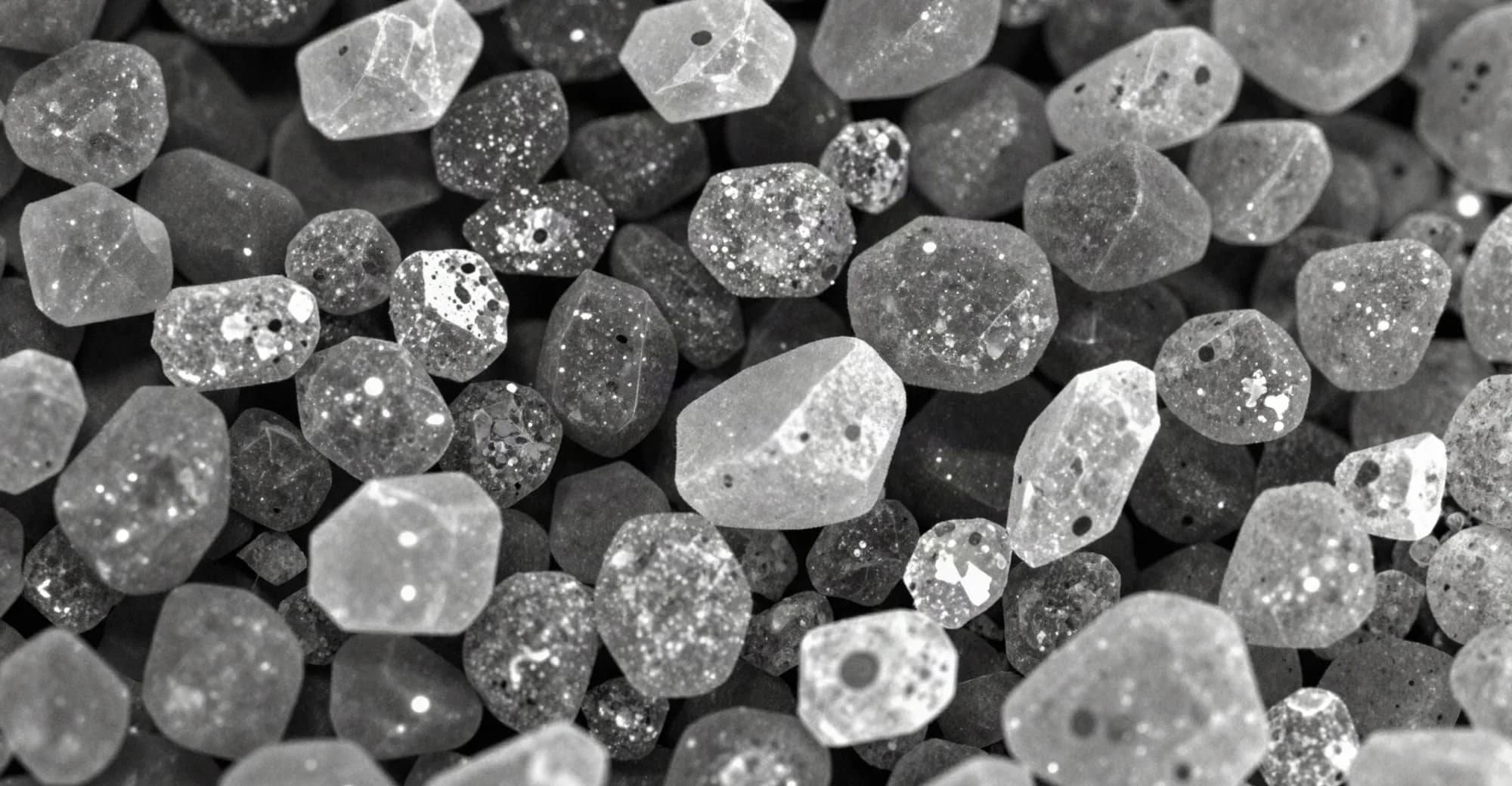
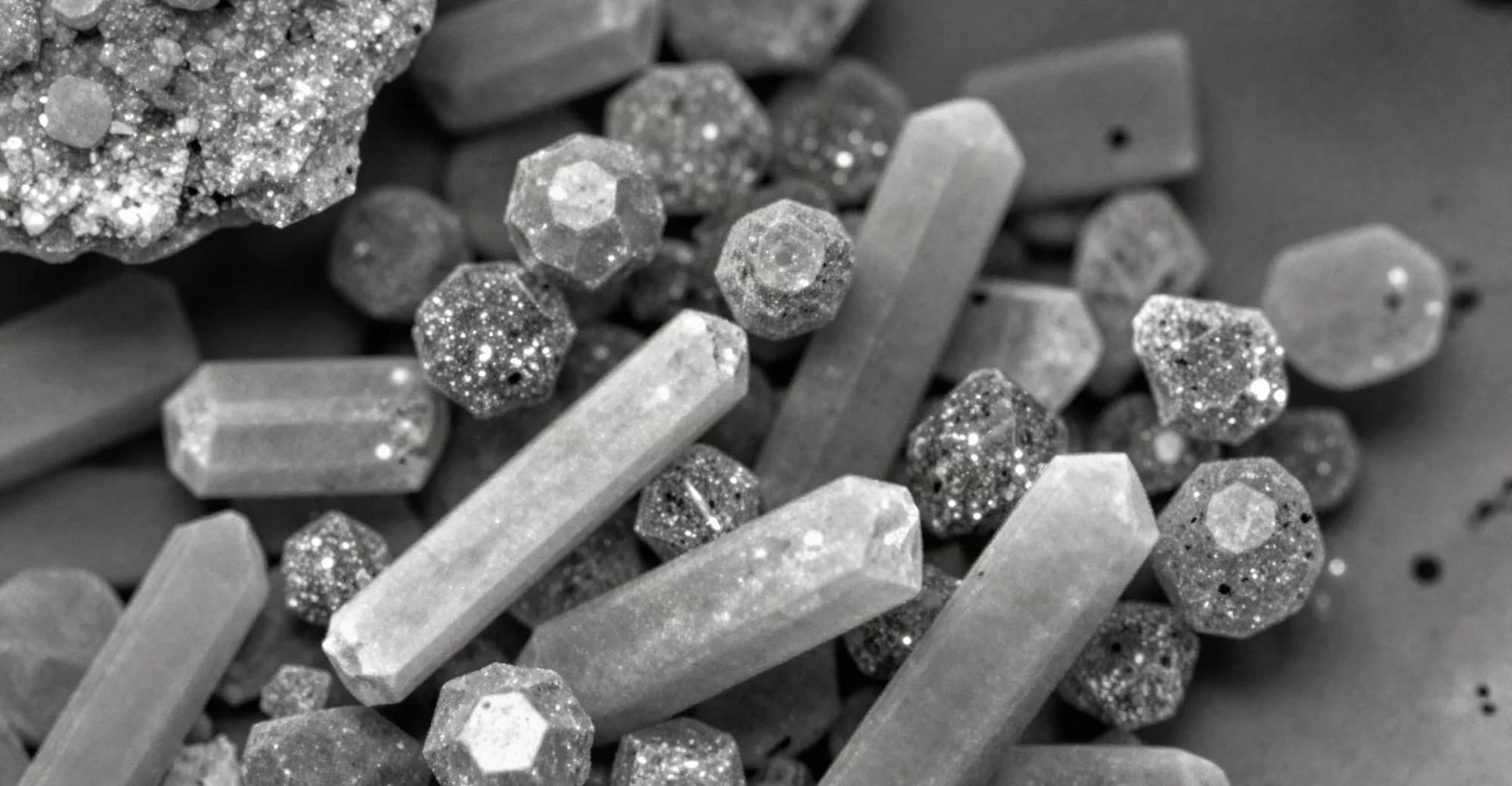
Hydroxyapatite particles have a strong tendency to aggregate, through van der Waals interactions and hydrogen bonding at the surface. The finer the powder, the more surface area is available and the more intense the aggregation — so the same synthesis that produces a small primary particle also produces a large agglomerate.
The practical consequence shows up in two places: in the particle size measurement, which starts measuring the agglomerate, and in the composite, where the agglomerate acts as a stress concentrator rather than reinforcement.
What a silane does at the interface
Silane coupling agents work as a molecular bridge between an inorganic mineral and an organic material. One end anchors to the particle surface; the other carries a functional group chosen for the matrix — vinyl, methacryloxy, primary amine, secondary amine or diamine, among others.
The effect is twofold. First, interfacial adhesion improves, because the filler stops being a foreign body in the matrix. Second, the tendency to agglomerate drops: silanisation removes part of the surface interactions responsible for aggregation and adds steric hindrance. Silanised fillers show lower agglomeration than untreated ones.
Functionalising is not "improving" the material in the abstract. It is choosing which matrix it will talk to — and a silane chosen for one matrix may do nothing in another.
Zeta potential as a reading of the surface
Surface treatment changes the electrical charge at the particle–medium interface, and zeta potential is the practical way to track it. In work with hydroxyapatite modified with a methacryloxy silane, for instance, the modification came with a reduction in crystal size and a shift in zeta potential.
The absolute value matters less than the comparative reading: zeta potential before and after treatment says whether the modification actually happened, and its behaviour against pH indicates the condition in which the suspension is most stable.
Dispersion is process, not only chemistry
A treated surface does not disperse on its own. The result also depends on the medium, the dispersant, the energy applied and the time — and a dispersion that works on the bench may not survive the shear of an industrial process, or may flocculate on a pH change further along the formulation.
So dispersion has to be assessed under the condition of use, not only under the condition of test. It is the same logic as particle size: the number only means something alongside the protocol that produced it.
What to specify
For a functionalised material, the specification gains items: which agent, which functional group, what coverage is intended and how it is verified. FTIR indicates the presence of the anchored groups, thermogravimetric analysis estimates the organic fraction, and zeta potential confirms the surface change.
At Triplet, functionalisation and doping are route adjustments, not catalogue products: they start from the target matrix and the intended behaviour, and are verified by characterisation before the material moves on to evaluation.
References
- On silanes as coupling agents at inorganic–organic interfaces and their application chemistry in polymers and composites
- Studies of silane-treated hydroxyapatite as a filler in biodegradable composites, and of functionalisation with aminopropyltriethoxysilane (APTES)
- ISO 13320:2020 — Particle size analysis — Laser diffraction methods, for reading agglomerate versus primary particle