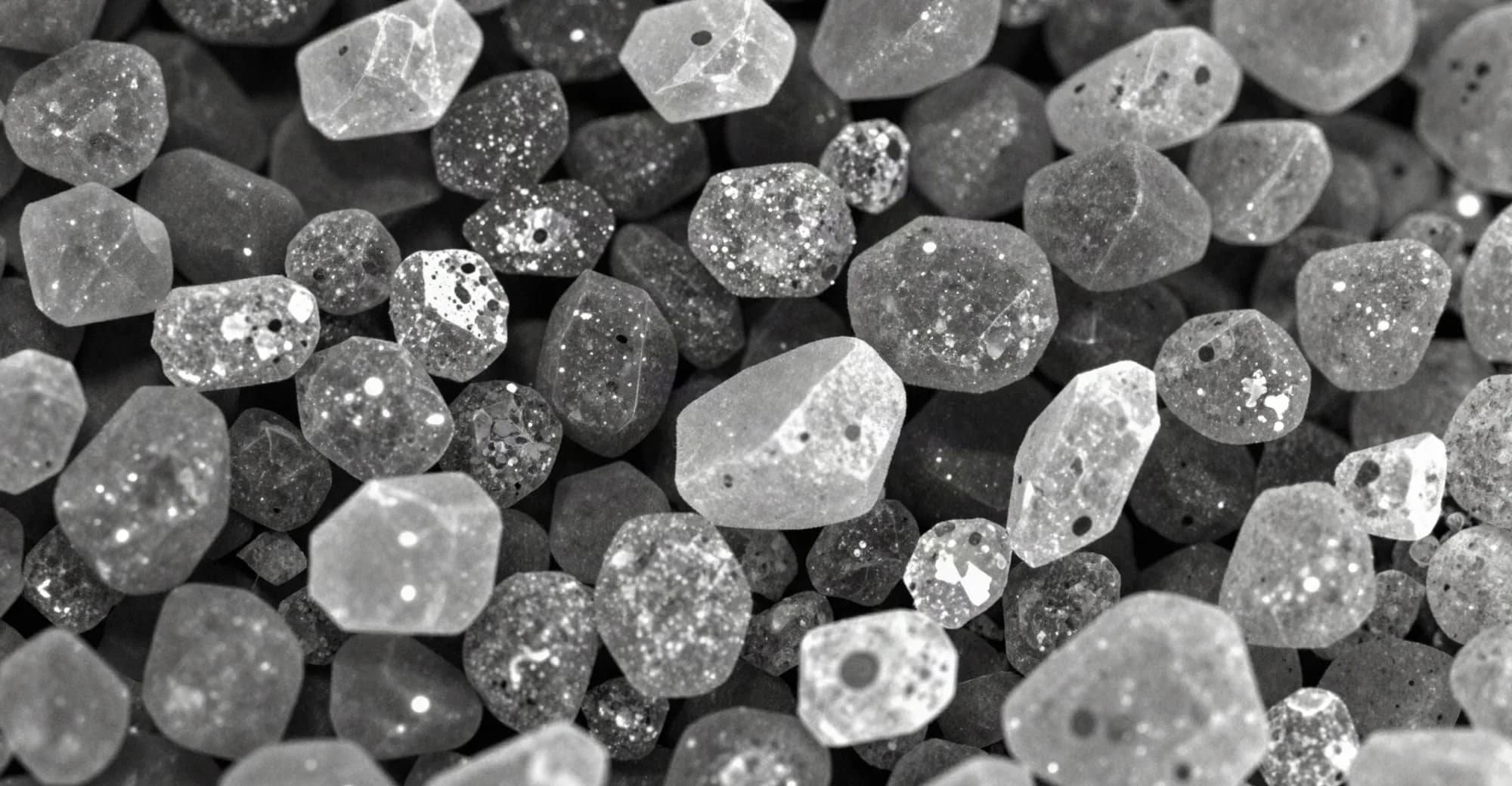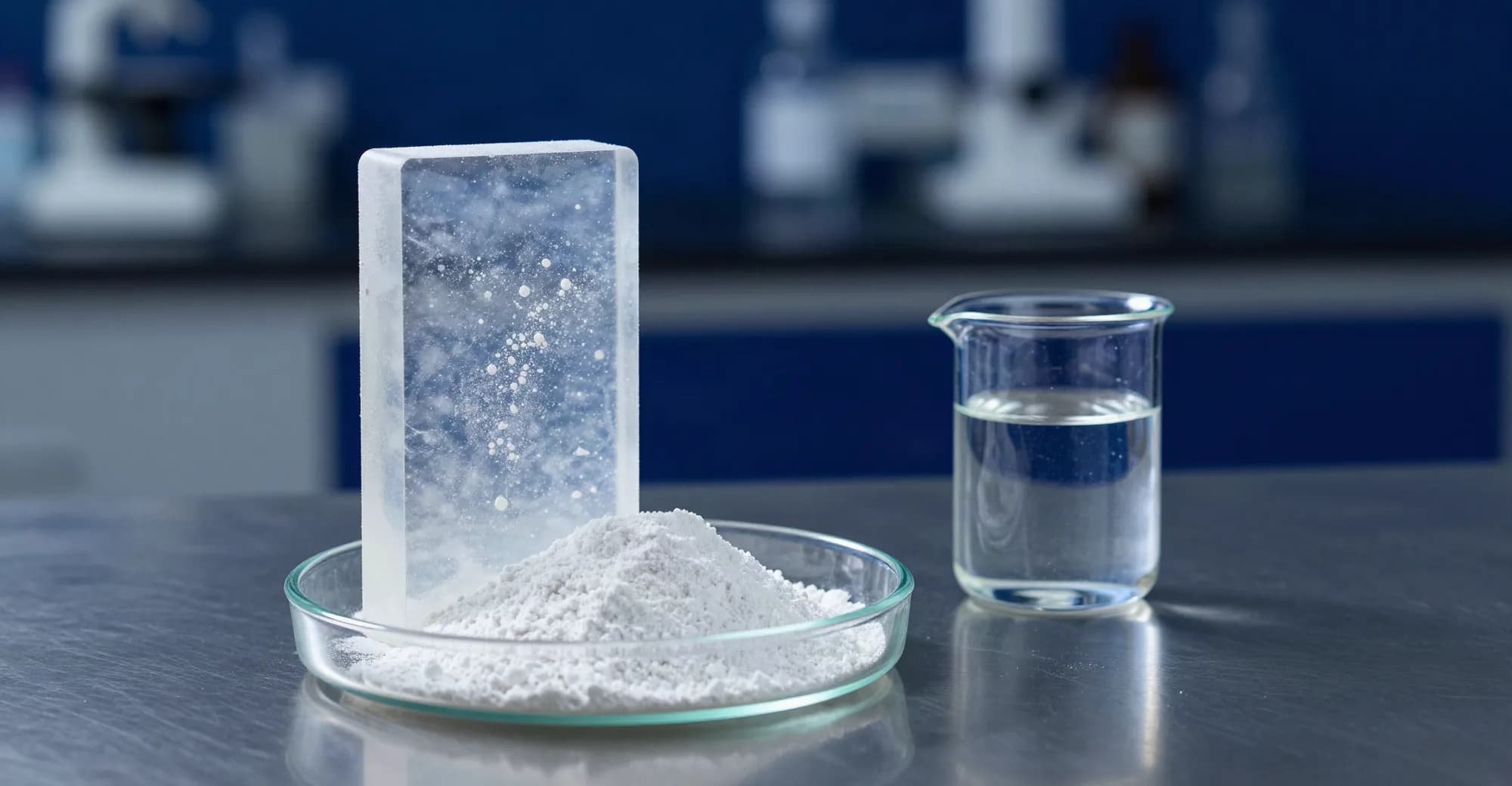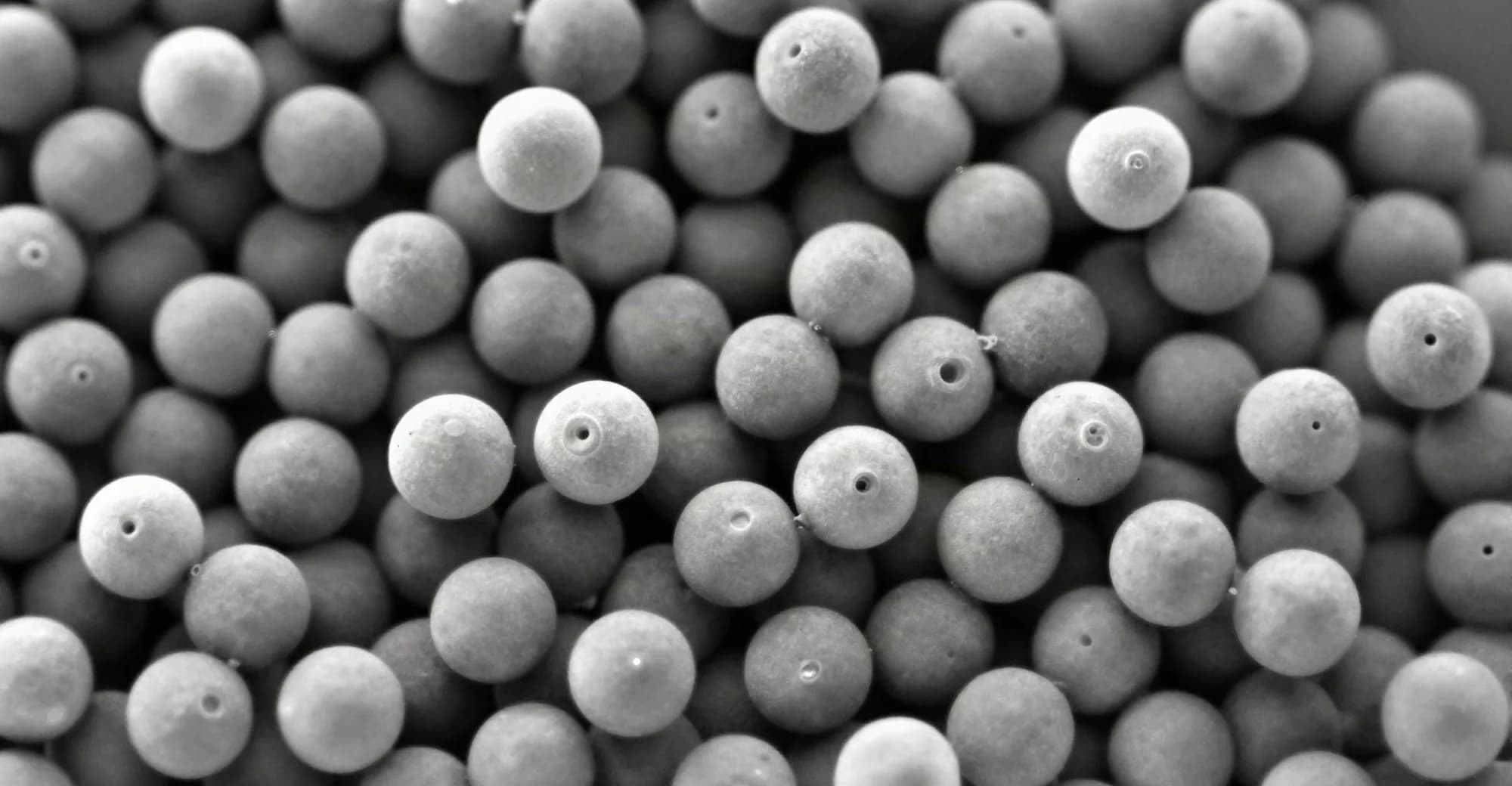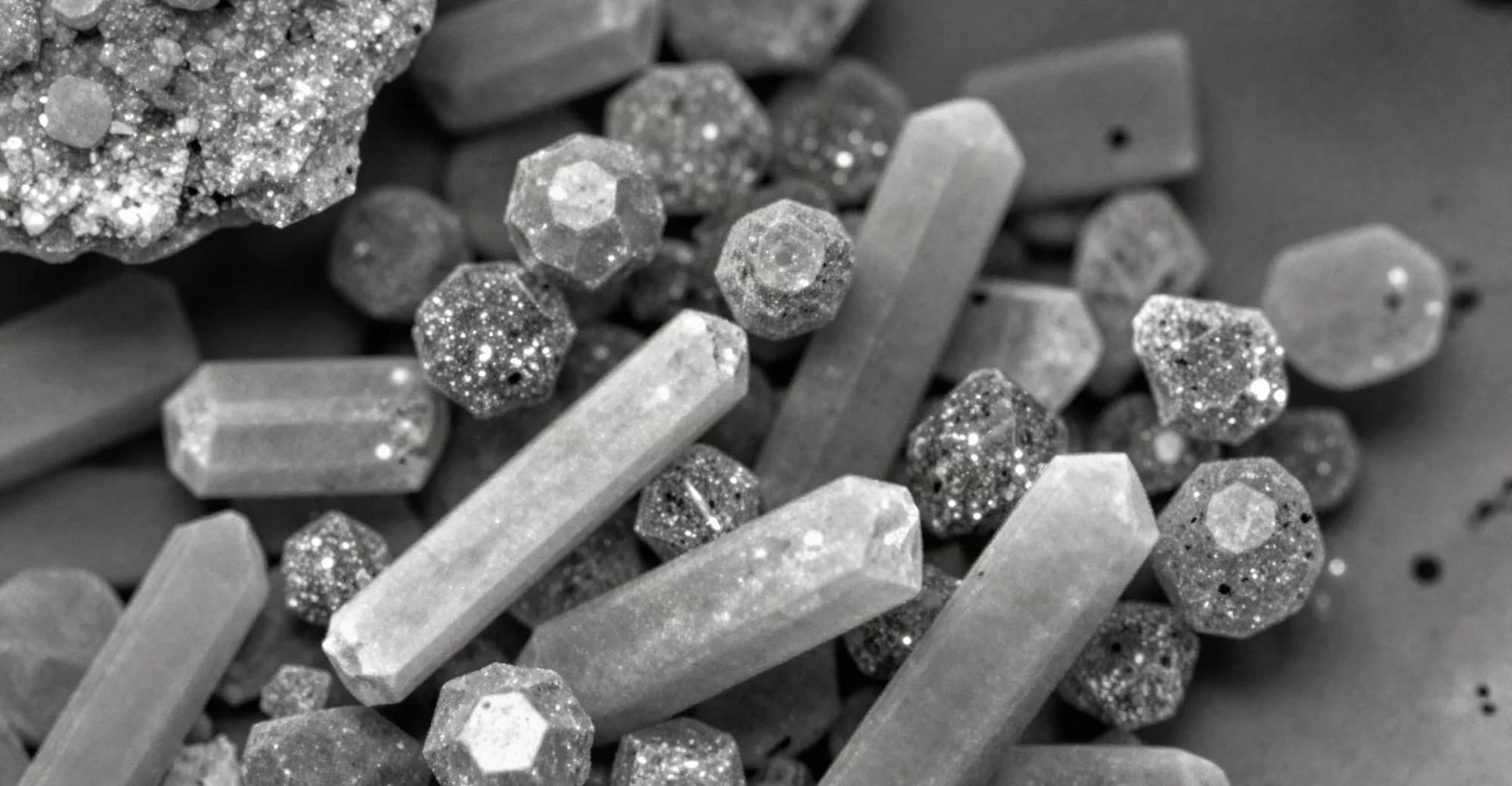
In a bioceramic, technical performance does not come down to a single number. It emerges from the relationship between chemical composition, crystalline organization, morphology, surface area and processing. Together, these parameters help make sense of how the material may behave across different media, matrices and application routes.
A technical specification, then, should not be read as a list of analytical results. It is a way of interpreting mineral identity, stability, reactivity, available surface and batch-to-batch reproducibility.
What crystallinity controls
Crystallinity describes the degree of atomic organization in the material. In calcium phosphates, more crystalline materials tend to show greater structural stability, while less crystalline phases may show greater reactivity in certain media.
There is no universally better value. The choice depends on the intended application, the matrix the material will be incorporated into, the processing route and the technical behavior sought.
The right specification is not the one with the highest possible purity, but the one that matches the behavior the material needs to show in the application.
Ca/P ratio and phase stability
The calcium-to-phosphorus ratio is an important indicator of the chemical identity of calcium phosphates. For stoichiometric hydroxyapatite, the reference value is close to 1.67. Deviations may point to ionic substitutions, secondary phases or differences introduced by the synthesis and processing route.
A technical report should therefore go beyond the name of the material. It should report crystalline phases, chemical composition, Ca/P ratio, morphology, particle size and, where applicable, surface area. Taken together, these data help anticipate the material's technical behavior.
Surface area and interaction with matrices
Surface area influences how much contact is available between the bioceramic and the medium in which it will be evaluated. Particles with greater surface area may interact more with matrices, polymers, solvents or dispersed systems, but they may also demand closer attention to dispersion and physical stability.
That balance matters especially in formulations, composites, suspensions and hybrid systems. The same material can perform differently once its particle size, morphology or surface treatment changes.
Why characterize before applying
Before evaluating a bioceramic in a specific application, it is essential to understand its physicochemical identity. Techniques such as XRD, FTIR, SEM/EDX, BET, ICP-OES and particle size analysis help turn a sample into traceable technical information. At Triplet, characterization is part of the engineering of the material. It guides adjustments to synthesis, processing, functionalization, doping and form of presentation, supporting decisions in research, formulation, industrial evaluation and co-development.